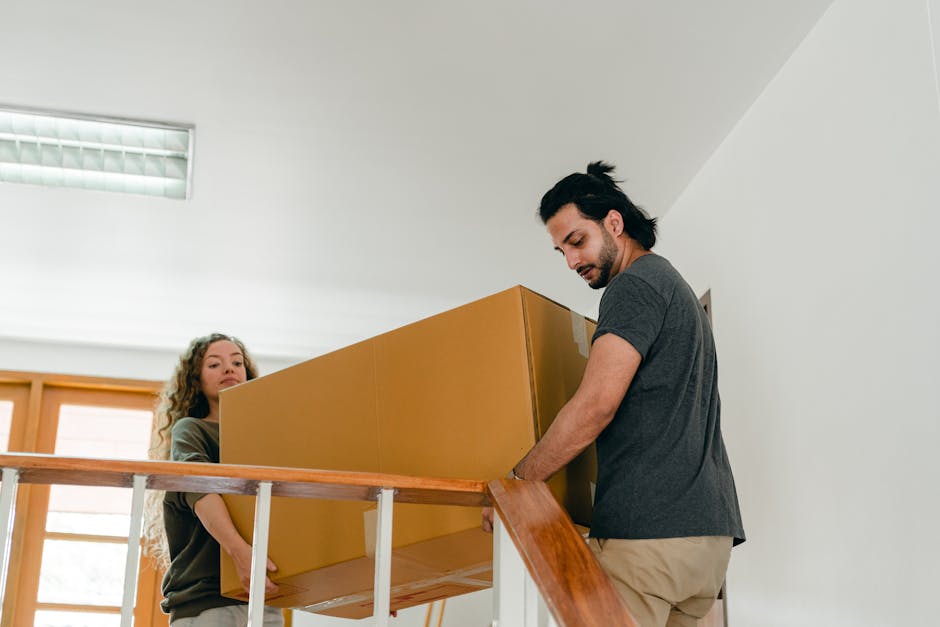
Who Covers Stair Carries in Riddlesdown Apartment Moves?
Posted on 10/06/2026
If you are moving in or out of a flat in Riddlesdown, stair carries can be the part that makes the whole day feel heavier than it should. Narrow landings, awkward turns, parked cars, a sofa that suddenly seems to have grown two inches - it all adds up. So who covers stair carries in Riddlesdown apartment moves? In most cases, it is the removal team or man and van crew you hire, but only if the job has been agreed in advance and the access details have been checked properly.
This article breaks down what stair carries actually involve, who is usually responsible, how crews handle them, what can affect cost, and how to avoid that awkward moment where everyone is standing on the staircase wondering who should take the lead. Truth be told, a little planning here saves a lot of noise, sweat, and stress later.

Contents
- Why stair carries matter in apartment moves
- How stair carries are usually covered
- Key benefits and practical advantages
- Who needs stair carry support
- Step-by-step guidance
- Expert tips for smoother stair carries
- Common mistakes to avoid
- Tools, resources and recommendations
- Law, compliance and best practice
- Options and comparison table
- Case study or real-world example
- Practical checklist
- Conclusion
- Frequently asked questions
Why Who Covers Stair Carries in Riddlesdown Apartment Moves? Matters
Stair carries are not just "extra lifting". In an apartment move, they are a separate access task that can affect safety, time, pricing, and whether your move feels controlled or chaotic. In Riddlesdown, that matters especially because many flats and maisonettes have tight stairwells, shared entrances, or limited room to manoeuvre larger furniture.
When people ask who covers stair carries, they are usually asking a few different questions at once:
- Will the movers take items up or down the stairs as part of the quoted job?
- Is there an extra charge if the property has no lift?
- Do I need to move things to the ground floor myself first?
- What happens if the item is too large or awkward for the stairs?
Those questions are sensible. They can be the difference between a move that feels straightforward and one that turns into a long, expensive shuffle with a scratched bannister and very sore shoulders. Nobody wants that at 4:30 on a wet afternoon, with one box left and the kettle still packed away.
It also matters because stair carries influence how a removal team plans the day. A crew that knows there are two flights, a narrow turn, and a heavy wardrobe can arrive with the right number of people, the right equipment, and the right timing. That is where the value sits: not just in lifting the item, but in reducing risk before the first step is even taken.
If you are already trying to get organised, it may help to look at the decluttering agenda for movers and packing techniques that support a smoother move. A lighter load is always easier on stairs. Always.
How Who Covers Stair Carries in Riddlesdown Apartment Moves? Works
In practical terms, stair carries are usually covered by the moving crew that has been hired for the apartment move. The mover's role is to transport items from one access point to another, and that often includes carrying items up or down internal or external stairs when a lift is not available or not suitable.
But the exact responsibility depends on what was agreed before move day. The usual setup looks like this:
- You describe the property access honestly when requesting a quote.
- The mover assesses whether stair carries are likely and how many items may need them.
- The quote reflects the labour, time, and any access difficulty.
- On the day, the crew handles the carry using suitable lifting methods and equipment.
If the building has awkward access, the mover may ask for more details. That could include floor level, number of stairs, width of turns, whether furniture is already dismantled, and whether parking is close enough for a van. For some jobs, a proper access check is more useful than a list of the furniture itself.
In many apartment moves, stair carries are shared work within the team. One person guides at the front, another supports the weight at the back, and a third may act as a spotter, especially on tight corners or when moving larger items. That team approach matters. It is not only about strength; it is about rhythm, communication, and keeping the item balanced.
For heavier items, the mover may use straps, dollies where appropriate, sliders, furniture blankets, or protective padding. A good crew will not just charge up the stairs and hope for the best. They will plan the route, pause at landings, and check door swings. Small things. Big difference.
For a wider service overview, you can also see the company's removal services overview and the dedicated flat removals in Riddlesdown page, which is especially relevant when stairs are part of the picture.
Key Benefits and Practical Advantages
The biggest benefit of having stair carries covered properly is simple: fewer problems on the day. But there are several more practical advantages, and they are worth spelling out.
- Less risk of injury: Stairs change the physics of a move. A load that feels manageable on level ground can feel awkward halfway up a staircase.
- Better protection for furniture: Careful carrying reduces scuffs, corner damage, and the dreaded "we'll just pivot it" moment that goes wrong.
- Faster progress: A crew that knows how to handle stairs works more steadily and wastes less time rethinking each piece.
- Clearer pricing: If stair carries are discussed early, there is less chance of surprise costs or hold-ups.
- Lower stress: Let's face it, moving is already a bit much. Knowing who is responsible for the stairs makes the day easier to manage.
There is also a softer benefit: confidence. Once you know the stair carries are in hand, you can focus on the other moving jobs that are already demanding your attention, like cleaning, keys, final checks, and those odd last-minute bits that somehow take up half the morning.
If you want more context on handling bulky pieces, the guides on lifting heavy objects safely and kinetic lifting strategies are useful background reading. They help explain why a stair carry should never be treated like a quick grab-and-go job.
Who This Is For and When It Makes Sense
Stair carries matter for almost anyone moving into or out of an apartment, but some situations make them especially relevant.
- People in upper-floor flats: If there is no lift, every large item has to be carried by hand.
- Tenants moving from converted houses: These often have narrow staircases and tighter corners than you expect.
- Students and young professionals: Smaller moves can still include awkward furniture, especially beds, desks, and wardrobes.
- Families with bulky items: Sofas, beds, and white goods are the usual troublemakers.
- Anyone with limited time: Same-day or compressed moves leave less room for trial and error.
It also makes sense if you are moving something delicate, heavy, or expensive. A piano, a large mirror, a mattress wrapped badly, or a sofa with fragile feet all need more than brute force. For example, if you are dealing with an upright piano, it is worth reading why you should not move your piano alone. Stair carries and specialist items do not mix well with guesswork.
And if the move includes awkward furniture, the page on furniture removals in Riddlesdown is a useful reference point for what a proper handled service tends to look like.
Step-by-Step Guidance
Here is the practical way to approach stair carries in a Riddlesdown apartment move.
- Identify the stair carry items early. Make a list of anything that will not fit in a lift, or that may be too long, wide, or awkward for stairs.
- Measure key dimensions. Check stair width, landing space, doorway clearance, and any tight corners. People forget the landing. They always do.
- Tell the mover about access. Be specific about floors, parking, and any restrictions. If there is a long walk from van to door, say so.
- Ask how stair carries are charged. Some jobs bundle them in; others factor them into labour time or access difficulty.
- Prepare items properly. Remove loose parts, wrap delicate edges, and dismantle furniture when possible.
- Clear the route. Keep hallways, stairs, and landings free from boxes, shoes, plant pots, and random clutter.
- Let the team lead the carry. Once lifting starts, allow the crew to work to their own sequence. Too many voices on a staircase is never a good idea.
A good mover will usually confirm the plan before lifting anything serious. If they suggest moving an item another way, listen. They are probably reacting to a real obstacle, not being difficult for the sake of it.
For extra moving preparation, it may help to pair this with stress-free moving tips and the practical advice in packing success techniques. Less clutter, fewer obstacles, cleaner stair carries.
![A young woman and a young boy are seen on a dark-colored staircase inside a modern residential property during a home relocation process. The woman holds a leafy potted plant in her left arm and appears to be descending the staircase, while the boy holds a stack of books in his hands. The staircase features a dark metal railing and black carpeting, with a white wall and a wall-mounted light fixture on the side. In the background, a door with frosted glass panels leads to another room, and natural light from a nearby window illuminates the scene. This image illustrates the process of packing, carrying, and moving household items, emphasizing careful handling and the logistics involved in furniture transport during house removals. Man with Van Riddlesdown, a professional moving service, often assists with such stair carries as part of their comprehensive relocation services at [PAGE_TITLE].](/pub/blogphoto/who-covers-stair-carries-in-riddlesdown-apartment-moves2.jpg)
Expert Tips for Better Results
Stair carries go better when the move is designed around them, not treated as a last-minute surprise. A few habits make a real difference.
- Disassemble what you can: Beds, table legs, and modular furniture are much easier to manage in parts.
- Protect stair edges: Carpet runners, padding, and blankets can help reduce scuffs on shared hallways.
- Use the right number of people: One extra pair of hands can prevent a lot of awkward lifting. Too few people is where trouble starts.
- Keep your hands free: Don't try to carry random extras while also opening doors or holding paperwork.
- Plan around parking: The shorter the carry from van to building, the easier the stair work tends to be overall.
- Take photos of any existing damage: It is a sensible habit, especially in shared buildings where walls and bannisters already have a life of their own.
One small but useful point: if the item looks too big for the staircase, it probably is. Better to say so early and work out a different route than to force a fit and end up with a stuck sofa. That happens more often than people admit.
For beds and mattresses specifically, the moving advice in proven strategies for moving your mattress and bed is well worth a look. Soft items seem simple until they catch on a banister or twist on the landing.
Common Mistakes to Avoid
The same issues crop up again and again with apartment stair carries. The good news is that most of them are easy to avoid once you know what to watch for.
- Underestimating access: A flat on the third floor with a tight stairwell is not a "small job" just because the inventory is short.
- Hiding the difficult bits: If you forget to mention narrow stairs or shared access restrictions, the mover cannot plan properly.
- Leaving items packed badly: Loose contents inside a box can shift mid-carry. That's how boxes split or topple.
- Trying to rush the carry: Speed without control is exactly where bumps and scrapes happen.
- Forgetting about the landing: Many moves go fine until the turn. Then everyone gets quiet.
- Assuming every item can be forced through: Some pieces genuinely need to be dismantled or carried by a different route.
There is also a customer-side mistake that is very common: assuming stair carries are automatically included in every low-cost quote. Sometimes they are. Sometimes they are not. Ask directly. It is a much nicer conversation before the van arrives than after the first awkward lift.
If you are worried about access, these local posts can help you anticipate the kind of planning that matters: avoiding van access problems on Grange Road, narrow-access removals on Riddlesdown Lane, and best van routes for big items in Riddlesdown.
Tools, Resources and Recommendations
You do not need a warehouse of equipment for a safe stair carry, but the right tools help a lot. In a typical apartment move, the crew may rely on some of the following:
- Furniture blankets: Useful for protecting edges, paintwork, and delicate surfaces.
- Straps and harnesses: Helpful for keeping weight balanced and shared between movers.
- Dollies and trolleys: Not always suitable for stairs, but useful at ground level and in some building layouts.
- Gloves with grip: Better handling, less slipping, especially with cardboard and smooth wood surfaces.
- Padding for door frames and banisters: Small bit of prep, major peace of mind.
- Basic dismantling tools: Allen keys, screwdrivers, and storage bags for fixings.
On the planning side, useful resources include a detailed quote discussion, a clear access checklist, and a moving timeline that tells you what happens when. If your move is time-sensitive, the page on same-day removals in Riddlesdown can be relevant, because stair carries become more difficult when everything is squeezed into a tighter schedule.
You might also find it helpful to think about what should be packed, sold, donated, or stored before move day. The guides on cleaning before moving and protecting a sofa in storage support that wider preparation nicely.
Law, Compliance, Standards, or Best Practice
For stair carries, the main thing is not a specific legal rule about who must carry what. Instead, the important part is safe working practice and clear agreement between customer and mover.
In the UK, movers are generally expected to work with reasonable care, use suitable handling methods, and avoid unsafe lifting. Good practice also means being honest about access conditions, using enough people for the job, and not attempting lifts that are clearly unsafe or likely to cause damage.
From a customer point of view, the best approach is to confirm:
- whether stair carries are included in the service
- how access issues affect pricing
- what items may need dismantling
- whether the crew will bring protective equipment
- any building rules about moving times, lifts, or floor protection
That kind of clarity is not bureaucracy for its own sake. It keeps everyone on the same page. It also helps reduce disputes later, which is why a clear terms and conditions page, a straightforward health and safety policy, and a sensible insurance and safety approach matter in a real-world moving setup.
There is also a practical accessibility angle. If a building has limited access or a resident has mobility needs, the move should be planned around that rather than forcing a standard approach. Good movers adjust. That is just sensible.
Options, Methods, or Comparison Table
When people talk about stair carries, they are usually weighing up a few different options. Here is a simple comparison to make the decision easier.
| Option | Best for | Pros | Limitations |
|---|---|---|---|
| Professional removal team | Full apartment moves, bulky furniture, tricky access | Safer, faster, usually better protected and more organised | Costs more than doing it yourself |
| Man and van with carry assistance | Smaller flat moves, mixed furniture, moderate stair work | Flexible and often good value | May not suit very heavy or delicate items |
| DIY with friends | Very small moves and lightweight items | Lower upfront cost | Higher risk of injury, damage, and delays |
| Specialist item move | Pianos, safes, large wardrobes, fragile valuables | Purpose-built handling and better protection | Usually limited to certain items, not the whole move |
For most apartment moves, a professional crew or experienced man and van service is the sweet spot. DIY can work for light loads, but stair carries are where enthusiasm meets reality rather quickly.
If you are comparing move types, the pages on man and van in Riddlesdown, man with a van in Riddlesdown, and removal companies in Riddlesdown give useful context for choosing the right setup.
Case Study or Real-World Example
Here is a realistic example. A tenant moves out of a second-floor flat in Riddlesdown with no lift, a sofa-bed, a double mattress, a chest of drawers, and several boxed kitchen items. On paper, it sounds manageable. In reality, the stairwell has a tight bend at the top and a narrow front door that opens inward.
The moving team does three things well:
- They ask for photos of the stairs and landing before the move.
- They recommend dismantling the bed frame the evening before.
- They send enough people to guide the sofa around the bend without forcing it.
Because the stair carry was planned, the job runs in a steady rhythm. The furniture arrives without damage. Nobody has to backtrack or improvise wildly on the staircase. The customer notices something small but meaningful: the day feels calmer because the difficult bit had already been thought through. That is the difference a proper stair-carry plan makes.
And yes, there is always at least one item that looks simple until you reach the stairs. Usually a wardrobe. Sometimes a washing machine. Occasionally both, because moving likes a bit of drama.
Practical Checklist
Use this checklist before move day if stair carries are likely.
- Confirm how many flights of stairs there are
- Measure stair width and tightest corners
- Check whether there is a lift and whether it is suitable for furniture
- Tell the mover about parking distance and access restrictions
- List every large or fragile item in advance
- Dismantle beds, tables, and modular furniture where possible
- Wrap delicate edges and remove loose contents from drawers
- Clear the hallway, stairs, and landing
- Protect floors and walls if the building requires it
- Ask whether stair carries are included in the quote
- Keep keys, entry codes, and contact details handy
- Have a backup plan for items that may not fit safely
If you tick most of those boxes, you are already ahead of the game. Not perfect, just prepared. And that is usually enough to make the day feel much less frantic.
Get a free quote today and see how much you can save.
Conclusion
So, who covers stair carries in Riddlesdown apartment moves? Usually the moving crew you hire does, provided the access details are shared upfront and the job is agreed clearly. That is the short answer. The longer answer is that stair carries work best when they are treated as part of the whole move plan, not a side note.
With the right team, the right preparation, and honest access information, stair carries become just another managed part of the day. Not effortless, because moving rarely is, but definitely more controlled. If you are facing a flat move in Riddlesdown, a bit of planning now can save a lot of heavy breathing later. And frankly, your back will thank you.
A smooth move is rarely the result of luck. It is usually the result of care, timing, and a team that knows how to handle the awkward steps without making a fuss.